
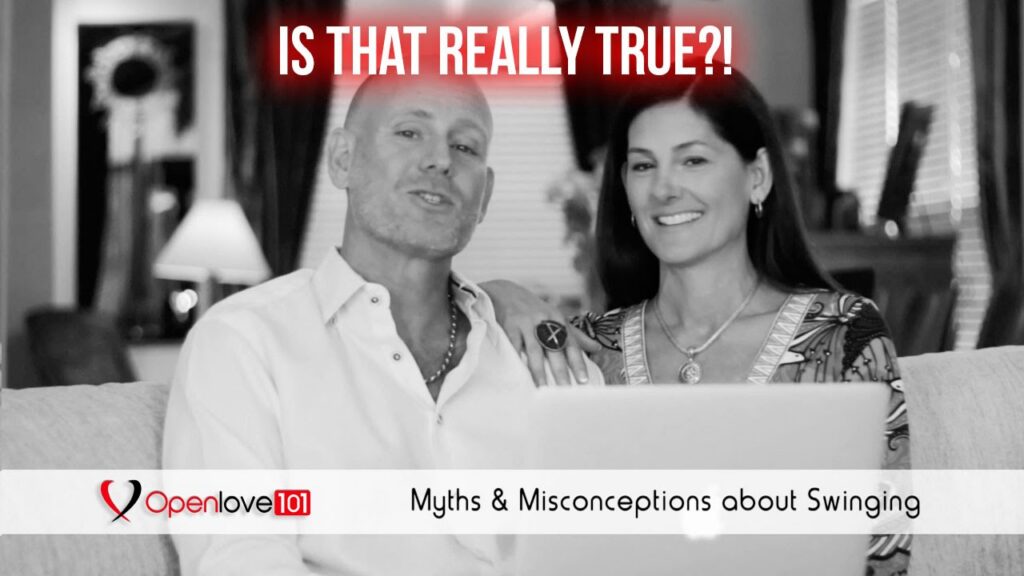
By Jackie Melfi | OpenLove101
Over the years, John and I have heard just about every misconception you can imagine when it comes to the swinging lifestyle. Some of them make us laugh, some leave us scratching our heads, and others remind me just how much misinformation is still out there about people who choose to explore relationships outside of traditional monogamy.
Recently, with all the conversations surrounding Ashley Madison and infidelity, I started thinking about how often swinging gets lumped into the same category as cheating. It seems that whenever people hear about someone having sex outside their marriage, they assume the circumstances must be the same, regardless of whether the people involved have actually agreed to it.
That assumption is just one of the reasons John and I started OpenLove101. We wanted to create a place where people could ask questions, learn about different relationship dynamics, and have conversations about sexuality without feeling embarrassed or judged.
The truth is, the swinging lifestyle is much more diverse than most people realize, and while I certainly can’t speak for everyone who participates in it, I can share what we’ve learned through our own experiences.
Is Swinging Really Just Cheating With Permission?
This is probably the misconception we hear most often, and I think it comes from the belief that being sexually involved with someone outside your marriage automatically means you’re being unfaithful.
I understand why someone who has only experienced monogamous relationships might see it that way. When you’ve grown up believing that sexual exclusivity is an essential part of commitment, the idea of your partner being intimate with someone else can seem completely incompatible with marriage.
The difference, though, is in the agreements you’ve made with your partner.
When someone cheats, they’re violating the expectations and boundaries of their relationship, often by hiding their behavior or being dishonest about what’s happening. In a consensually open relationship, the people involved have discussed what they’re comfortable with and have agreed to those experiences.
John and I don’t always agree on everything, and there have certainly been conversations throughout our relationship that required us to be vulnerable with each other. We’ve had to talk about feelings, insecurities, and boundaries just like any other couple. The difference is that we’ve chosen to include conversations about sexual experiences with other people as part of that communication.
That doesn’t mean swinging somehow makes a relationship immune to dishonesty. Someone in an open relationship can absolutely cheat if they disregard an agreement or hide something from their partner. Having an open relationship doesn’t eliminate the responsibility to be honest.
I think what people sometimes overlook is that commitment doesn’t necessarily look the same in every relationship. For John and me, our commitment to each other isn’t defined solely by sexual exclusivity. It’s also defined by the trust we’ve built, the respect we have for one another, and our willingness to keep communicating even when a conversation feels uncomfortable.
Do Swingers Really Want to Sleep With Everyone?
Another assumption I hear quite often is that swingers are willing to have sex with just about anyone, as though identifying with the lifestyle somehow means you no longer have personal preferences or standards.
I always find this one interesting because attraction doesn’t suddenly work differently just because you’re in an open relationship.
Think back to when you were dating. There were probably people you found physically attractive but didn’t particularly enjoy talking to, and there may have been others whose personalities made them more attractive the longer you spent time together. The same things happen when you’re meeting people in the swinging community.
For John and me, personality and connection have always been important. We enjoy meeting people, getting to know them, and seeing whether there’s a natural chemistry. Sometimes we meet someone who’s physically attractive, but the conversation just isn’t there. Other times, we find ourselves laughing and having such a good time with another couple that the attraction develops naturally.
I think there’s a misconception that swinging is always about finding the next sexual experience, when in reality, many people are looking for the same things they value in other social situations: good conversation, shared interests, a sense of humor, and people they genuinely enjoy being around.
Of course, there are people within the lifestyle who prefer more casual encounters, and there’s nothing inherently wrong with that when everyone involved is on the same page. My point is simply that you can’t assume someone’s preferences based on the fact that they’re a swinger.
Being open to sexual exploration doesn’t mean being interested in everyone you meet, and it certainly doesn’t mean anyone is entitled to your attention.
Not Every Swinger Is Interested in Full Swapping
One of the things that surprises newcomers is discovering just how many different ways people participate in the lifestyle.
I think some people imagine that once a couple decides to explore swinging, they’re immediately going to start swapping partners and having sex with other couples. In reality, that’s only one possibility, and plenty of people never choose to explore it.
Some couples enjoy going to lifestyle clubs because they like the atmosphere and the freedom of being around other open-minded adults. They might dance, socialize, meet new friends, and go home together without having any sexual interaction with anyone else.
Other couples are comfortable with certain types of intimacy but have boundaries around others. You may hear the term soft swap, which generally refers to couples who enjoy activities such as kissing, touching, or other forms of sexual interaction while choosing not to have penetrative sex with other partners.
Then there are couples who enjoy full swapping, couples who prefer experiences with single individuals, and people whose interests fall somewhere in between.
Even within those categories, you’ll find different preferences and agreements.
What I wish more people understood is that there’s no requirement to participate in any particular activity. Just because you’re attending a swingers club doesn’t mean you’re expected to have sex with someone, and just because another couple enjoys something doesn’t mean you need to be comfortable with it.
John and I have always encouraged people to figure out what works for their own relationship rather than trying to follow someone else’s example.
Your comfort level matters, and it should never be something you feel pressured to compromise simply because you’re curious about the lifestyle.
There’s More to Swinging Than the Sexual Side
Whenever the swinging lifestyle comes up in conversation, people naturally focus on the sexual aspect. I suppose that’s understandable, considering it’s what makes the lifestyle different from many traditional social communities.
What tends to get overlooked, though, is how much of the experience can revolve around friendships and connections with other people.
Some of our favorite memories involve the people we’ve met and the conversations we’ve had along the way. We’ve gotten to know individuals and couples with different backgrounds, experiences, and perspectives on relationships, and those interactions have given us opportunities to learn things we might never have considered otherwise.
There are people we’ve met through the lifestyle whom we simply enjoy spending time with. We can have dinner, laugh about something ridiculous, or talk about what’s happening in our lives without sex ever being part of the equation.
I think that’s an important distinction because people sometimes imagine swingers as individuals who are only interested in one another for sexual reasons. While that may describe some encounters, it certainly doesn’t describe every relationship or friendship that develops within the community.
For many people, having a social circle where they can speak openly about their relationships and sexuality without worrying about being judged is meaningful in itself.
Why Do We Assume Sexual Exploration Is Something Negative?
Another thing John and I have discussed is the way people use words like kinky when they’re talking about sexuality.
It’s interesting how quickly that word can change the tone of a conversation. Depending on who’s saying it, being kinky might be presented as something exciting and adventurous or as something strange that people should be embarrassed about.
I’ve always found that a little puzzling because people have different interests in nearly every other part of their lives, and we generally accept that those differences are normal.
Some people love trying new foods, while others prefer ordering the same meal every time they visit a restaurant. Some enjoy traveling to unfamiliar places, while others are happiest spending their vacations somewhere comfortable and familiar.
Our sexual preferences can be just as individual.
Something that feels adventurous to one person might be completely ordinary to someone else. Exploring those differences doesn’t automatically make someone unhealthy or mean they’re dissatisfied with their relationship.
I also think it’s important to remember that curiosity doesn’t create an obligation to act on anything. You can have a fantasy without wanting to experience it, just as you can enjoy discussing something with your partner and ultimately decide it isn’t right for either of you.
What matters is being able to have those conversations honestly, without shame, while respecting everyone’s comfort levels and consent.
Personally, I think there’s a lot of value in understanding your own sexuality, whether that leads you toward new experiences or simply helps you feel more comfortable with who you already are.
The Problem With Putting Everyone Into the Same Category
If there’s one thing I’ve learned from being part of the swinging community, it’s that there really isn’t a typical swinger.
I’ve met people who are outgoing and adventurous, people who are quiet and reserved, couples who have been together for decades, and others who are still figuring out what they want from their relationships.
Some people are comfortable discussing their lifestyle with friends and family, while others prefer to keep that part of their lives private. Some are very active socially, and others might attend an event only occasionally.
I think we sometimes forget that people don’t stop being individuals simply because they share an interest or participate in the same community.
We wouldn’t assume that every married couple has the same relationship dynamics, sexual preferences, or beliefs about intimacy. Yet when it comes to swinging, people often seem to think that one person’s experience represents everyone else’s.
That can be frustrating, especially when the assumptions are based on something someone saw on television or read in an article about infidelity.
I don’t expect everyone to understand the lifestyle, and I certainly don’t expect everyone to want to participate. I do hope, however, that people can recognize the difference between not wanting something for themselves and assuming there’s something wrong with the people who choose it.
Why John and I Keep Having These Conversations
When John and I first started sharing our experiences, one of our goals was to make information about the swinging lifestyle more accessible.
We knew there were people who were curious but didn’t know where to start, as well as couples who had questions they were afraid to ask because they worried about how those questions might be received.
And I think that fear of judgment can prevent some really valuable conversations from happening.
Talking about sexual curiosity doesn’t mean you’re unhappy in your marriage. Asking about swinging doesn’t mean you’ve already decided to participate, and being interested in learning about different relationship structures doesn’t mean you have to change your own.
Sometimes people are simply curious, and I think curiosity is a perfectly good reason to learn something.
I also think that when we understand why other people make different choices, it becomes easier to approach those differences with respect instead of assumptions.
John and I have chosen a relationship that works for us, but I would never suggest that swinging is the answer for every couple. There are many people who are genuinely happy and fulfilled in monogamous relationships, just as there are people who find consensual non-monogamy fulfilling.
What matters is that both partners feel comfortable with the relationship they’ve chosen and can talk openly about their needs and expectations.
What Have You Always Wanted to Know About Swinging?
I would love to know what misconceptions you’ve heard about the lifestyle, especially the ones that have made you curious or left you wondering whether they’re actually true.
Maybe you’ve heard that swingers don’t get jealous, that everyone at a swingers club is expected to participate, or that couples who swing must be missing something in their marriage. Those are all conversations worth having, and they’re exactly the kinds of subjects John and I enjoy discussing.
If there’s something you’ve always wanted to ask, I encourage you to share it with us. We love hearing from our community, and your questions often help us decide what topics to explore in future videos and articles.
We also enjoy giving back to our community through contests and giveaways, so be sure to follow along for opportunities to participate.
At the end of the day, I don’t think we all need to agree on what the perfect relationship looks like. I do think we’d benefit from being a little more willing to listen to one another and a little less willing to believe every stereotype we hear.
After all, there’s a pretty big difference between what people assume about the swinging lifestyle and what those of us who actually participate in it experience.
And sometimes, all it takes to begin understanding that difference is an honest conversation.
Love,
Jackie
For more conversations about relationships, intimacy, communication, and the swinging lifestyle, visit OpenLove101.com.

Courtney is the Marketing Director for Openlove101 and colette Clubs.