
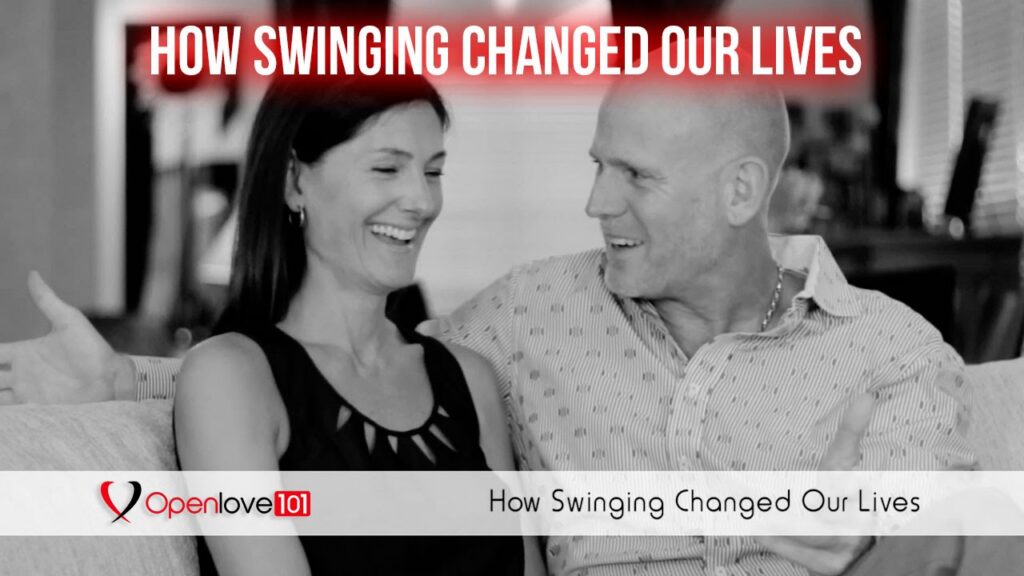
By John & Jackie Melfi | OpenLove101.com
When people first hear the word swinging, their minds usually go straight to sex.
And yes, sexuality is certainly part of the lifestyle. But for us, some of the biggest changes have happened far beyond the bedroom.
Exploring the swinger lifestyle has changed the way we think about sexuality, jealousy, communication, friendship, trust, and even personal freedom. It has given us opportunities to learn more about ourselves individually while creating a relationship where we can be incredibly honest about who we are and what we want.
For Jackie especially, that transformation meant completely reconsidering ideas about sexuality that had been with her for much of her life.
Learning to Embrace Your Sexuality
Before entering the lifestyle, Jackie came from a very traditional monogamous background.
Sex had largely been framed within the context of marriage and reproduction. Exploring the lifestyle introduced an entirely different idea: sexuality could also be about pleasure, curiosity, connection, exploration, and personal expression.
That realization became empowering.
There can be something incredibly freeing about realizing that your sexuality belongs to you. You can explore what you enjoy, learn what makes you feel confident and connected, and communicate those discoveries with your partner.
For Jackie, embracing that part of herself wasn’t simply about having new sexual experiences. It changed how she viewed herself.
And that kind of self-discovery can have an impact far outside the bedroom.
Our Relationship With Jealousy Changed
Another major change involved jealousy.
In many traditional relationships, we’re taught to see another person’s attraction to our partner as a potential threat.
What if they like someone else?
What if someone else can give them something I can’t?
What if they leave?
When we began exploring an open relationship, we had to look at those questions differently.
Instead of trying to eliminate every situation that could potentially make one of us uncomfortable, we learned to talk about what we were feeling.
Why am I uncomfortable?
What am I afraid could happen?
Do I actually feel threatened, or is this an old reaction based on what I’ve always believed relationships were supposed to look like?
Those conversations helped us build a different relationship with jealousy. Rather than automatically allowing it to dictate our behavior, we could examine it together.
That doesn’t mean everyone who enters the lifestyle suddenly stops experiencing jealousy. Emotions are much more complicated than that. But consensual non-monogamy can create opportunities to understand jealousy instead of simply reacting to it.
Honesty Became Even More Important
You can’t successfully navigate an open relationship without talking.
A lot.
You have to discuss attraction. Sex. Boundaries. Insecurities. Fantasies. Friendships. Mistakes. Excitement. Jealousy. Sometimes you even have to admit something you’re feeling when you don’t completely understand why you’re feeling it yet.
For us, that level of communication created an incredible amount of honesty.
There isn’t the same need to hide the fact that someone is attractive or pretend that attraction to other people disappears simply because you’re in love.
We can acknowledge those feelings and talk about them.
That openness has helped create a relationship where we feel comfortable bringing difficult or vulnerable subjects to each other instead of hiding them.
Freedom Doesn’t Have to Mean Losing Your Partner
One of the most interesting lessons we’ve learned is that giving each other freedom doesn’t necessarily create distance.
For us, it has often done the opposite.
When your relationship isn’t built around preventing your partner from connecting with other people, friendships can develop without automatically being viewed as threats.
We can meet people, build friendships, explore connections, and have experiences while knowing that our relationship isn’t disappearing because another person entered the picture.
That security gives us room to be individuals while still choosing one another as partners.
There’s an important distinction there.
Freedom isn’t the absence of commitment.
For us, freedom exists within commitment.
Different Experiences Can Teach You About Yourself
Another benefit we’ve discovered is variety.
Every person is different. They communicate differently. Connect differently. Express affection differently. And yes, they can be different sexually too.
Experiences with other people can introduce you to things you didn’t know you enjoyed—or even things you discover you definitely don’t enjoy.
Either way, you’re learning.
You may discover a new preference and bring that knowledge back into your relationship. You might see your partner respond to something differently and learn something new about them. You may simply encounter someone with a completely different perspective that makes you reconsider your own.
Rather than automatically viewing those experiences as competition with our relationship, we’ve learned to see them as additional opportunities for discovery.
Someone else doesn’t have to take something away from your relationship for an experience with them to have value.
Sometimes you bring something back.
Questioning What Relationships Are “Supposed” to Look Like
Perhaps one of the biggest changes the lifestyle brought into our lives was permission to question assumptions.
We’re often handed a relationship template long before we’re old enough to decide whether it actually fits us.
You meet someone. You become exclusive. You marry. Sexual and romantic attraction toward anyone else is supposed to disappear—or at least never be acknowledged.
That model works beautifully for many people.
But it isn’t the only model.
Exploring consensual non-monogamy allowed us to ask a different question:
What kind of relationship actually works for us?
That’s an important distinction.
We’re not interested in replacing one rigid relationship rulebook with another. Swinging isn’t inherently better than monogamy, and monogamy isn’t inherently better than swinging.
What matters is creating a relationship intentionally rather than simply following expectations you’ve never examined.
For us, consensual non-monogamy feels authentic. For another couple, monogamy may feel completely authentic.
Both can be healthy when they’re built on honesty, consent, communication, and mutual respect.
The Lifestyle Became About More Than Sex
One of the biggest misconceptions about swinging is that everything revolves around sex.
Our experience has been much broader.
We’ve met people. We’ve developed friendships. We’ve had conversations that challenged us. We’ve learned about ourselves. We’ve confronted insecurities. We’ve become better communicators.
And yes—we’ve had a lot of fun along the way.
The sexual experiences are certainly part of our story, but they aren’t the whole story.
The lifestyle has given us another space in which to explore who we are, both individually and together.
What Has the Lifestyle Taught You?
If you’re already part of the swinger or consensually non-monogamous community, think back to the person you were when you first started exploring.
What’s changed?
Maybe you’ve become more confident. Maybe you’ve learned how to communicate better. Perhaps you’ve confronted jealousy or discovered boundaries you didn’t know you needed. Maybe you’ve made incredible friendships.
And if you’re simply curious about the lifestyle, you don’t have to know exactly where your journey will lead before you begin learning about it.
Ask questions. Talk with your partner. Examine your assumptions. Take your time.
Because exploring a different relationship structure isn’t simply about discovering what you want to do with other people.
Sometimes the most interesting discovery is what you learn about yourself—and each other.
At OpenLove101, we believe conversations about relationships, sexuality, jealousy, communication, and consensual non-monogamy deserve to happen without shame or judgment. Join John and Jackie Melfi as we continue exploring the lessons, challenges, and unexpected benefits that can come with creating a relationship on your own terms.

Courtney is the Marketing Director for Openlove101 and colette Clubs.